

Word scrambles have enthralled word game fans for years, offering a playful way to challenge the brain and expand lexicon. Whether you're a seasoned word player or a occasional player, these charming puzzles can provide lots of entertainment and cognitive engagement. In this definitive guide, we will investigate the world of word scrambles, exploring helpful techniques, insider secrets, and the cognitive benefits of taking part in this classic pastime.
As you explore various areas of this guide, you will uncover tips to deciphering word scrambles with ease and learn about frequent letter combinations that can help your efforts. We will also set apart word scrambles and word jumbles, analyze the best games for players of all generations, and even reveal how you can make your very own puzzles to test friends and family. So, whether you are looking to improve your proficiency or just enjoy the excitement of solving letters, this comprehensive resource is intended to enhance your word scramble experience.
Expert Suggestions for Solving Word Mix-Ups
One useful strategy for approaching word scrambles is to identify commonly used prefixes and suffixes. A lot of words share similar starts or finishes, so identifying these can significantly narrow down options. For instance, identifying that a scrambled word starts with "un," "pre," or "re," or concludes with "ing," "ed," or "tion" can aid you quickly form potential word solutions. This approach leverages your understanding of word structure and can lead to quicker solving times.
Another helpful tip is to concentrate on the length and composition of the scrambled characters. Begin by looking through the letters for self-letters, as they often serve as the backbone for most words. After finding the vowels, search for consonants that are likely to work effectively together, such as "ch," "sh," or "tr." Manipulating the arrangement of letters in your mind or on paper can spark insights into possible word formations, making the process more intuitive.
Lastly, practice makes perfect. The more you practice word scrambles, the sharper your skills will become. Consistently solving different puzzles can assist you identify letter patterns and popular words, improving your overall speed. Ponder setting aside time each week for dedicated practice, whether through books, online puzzles, or apps. This steady effort not only refines your skills but also improves your vocabulary, which can be beneficial in untangling more challenging scrambles.
Strategies for Mastering Word Scramble Games
To succeed in word jumble games, it's crucial to familiarize yourself with frequent letter patterns. Numerous English terms follow specific formats, such as consonant-vowel combinations or common prefixes and suffixes. By recognizing these structures, you can quickly spot possible words as you rearrange the scrambled letters. Watch for frequently used combinations like "th," "ch," or "sh" can greatly speed up your solving process.
Another successful strategy is to start with the vowels. Since vowels are less frequent than consonants, spotting them can help limit your options. Look for combinations that contain the vowels you've found, and consider where consonants might fit around them. This approach allows you to form potential word segments and gives you a better picture of the overall word form, making it simpler to find the solution.
Lastly, practice makes improvement. The more you play word scramble games, the better you'll become at recognizing patterns and formulating strategies. Challenge yourself with increasingly difficult puzzles and track your progress. Consider timing your attempts to assess your improvement, and don't hesitate to use online word scramble helpers for feedback. This combination of independent practice and assistance will refine your skills and lead to greater success in cracking word scrambles.
Advantages of Letter Scrambles for Mental Skills
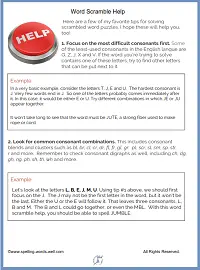
Doing word scramble puzzles yields many mental advantages which can improve cognitive flexibility. These puzzles challenge individuals to rearrange characters quickly and precisely, stimulating critical thinking and problem-solving skills. While solve jumble strive on interpret scrambled letters, they train their brains in a manner that promotes flexibility and versatility. This cognitive exercise can lead to greater quickness in understanding data, which is crucial in dynamic settings.
Furthermore, completing word scrambles enhances word knowledge and linguistic skills. Participants come across novel terms and are required to decipher their meanings, which can augment vocabulary over time. This exposure further aids improve spelling skills, as solvers become acquainted with the structure and arrangement of letters in various terms. By regularly engaging with word scrambles, individuals can develop a more robust and diverse lexicon, enhancing communication skills and writing abilities.
In conclusion, word scrambles can enhance recall abilities. Remembering remembering scrambled letters and linking them to the correct terms activates multiple cognitive processes within the brain. Over time, this may result in enhanced recall abilities, not just in word-related tasks but also in everyday life. The fun challenge of these puzzles encourages regular practice, that is essential for maintaining cognitive health and sharpness as one ages.